Terms of Service — Building the Pipeline
Category: Film, Pre-Production, 3D, Concept Art, Compositing, AI-Assisted Workflow
The Myth of “AI-Made”
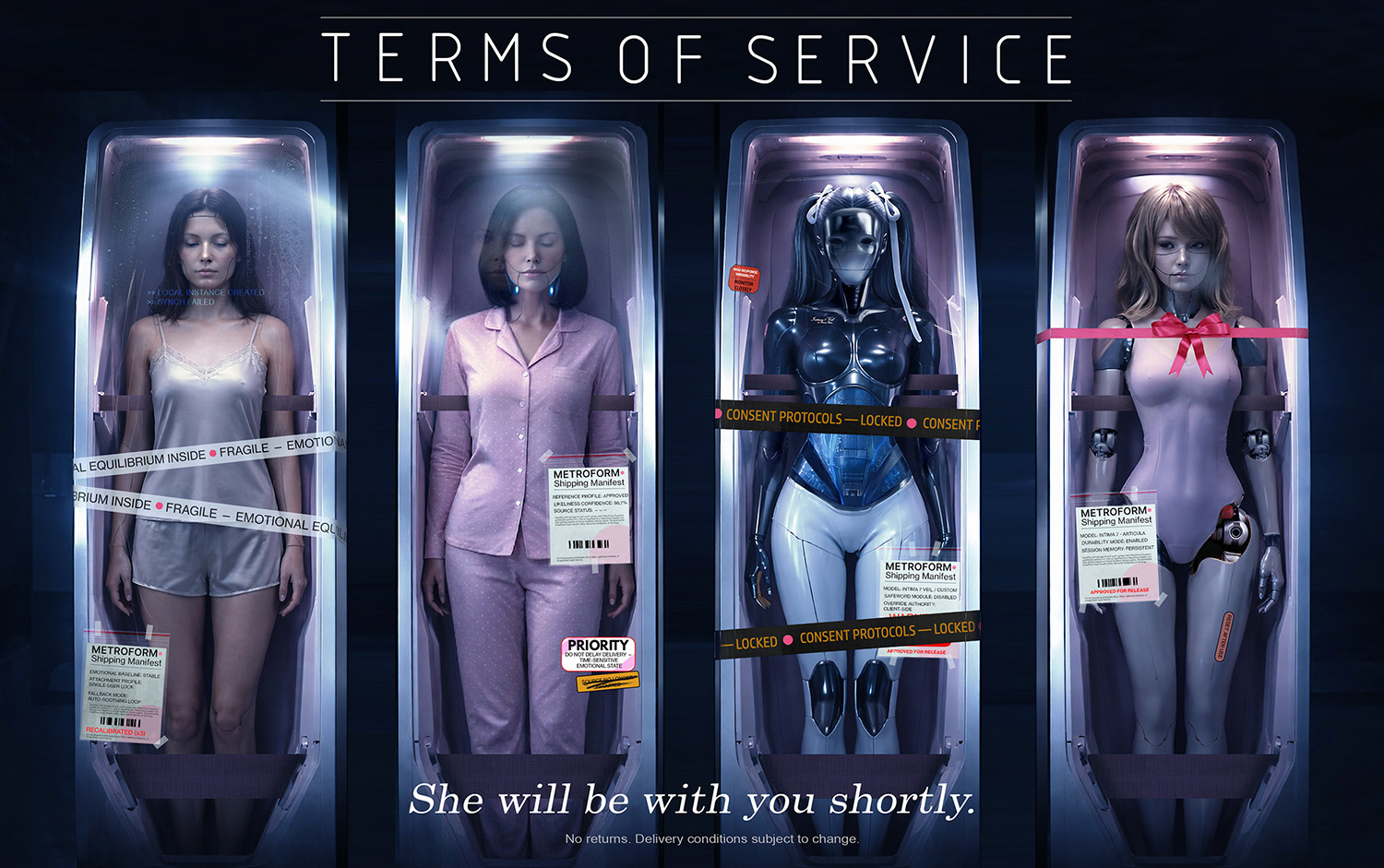
As Terms of Service moves deeper into pre-production, I’ve noticed something interesting: people tend to assume that if AI tools are involved, the process must be fast, chaotic, or improvisational. It isn’t.
In fact, the production pipeline for this series relies heavily on classical ("old school", so to speak) 2D and 3D techniques. Sketching. 3D modeling. Photo-bashing. Matte painting. Photography. Live-action recordings. Digital compositing. Motion graphic programming. The foundation is traditional. AI tools are introduced much later in the chain — mostly as render engines and animation engines for frames that have already been designed, staged, and art-directed.
The goal isn’t to “generate scenes” and call it a day. It’s to design them first — then render them efficiently and precisely.
Designing Space Before Generating It
Every episode begins spatially.
Before a single frame is generated, shots are laid out and roughly modeled in Maya. Not detailed, not polished — just enough to establish scale, camera placement, and spatial logic. Apartments, hallways, basements, containment pods - all the necessary architectural elements of the world.
Characters are brought in from DAZ 3D and posed in key positions. Not to finalize them — but to anchor them, check the scale, find the best camera position. Once the 3D layout feels correct, every shot is storyboarded. Sometimes a quick screenshot becomes the base layer for drawings. Over that, story beats and motion are planned manually. Key props are sketched, first using pen and marker. Mechanical elements are designed the same way I would design them for a game or film production. Nothing is left to chance.
Refinement Before Rendering
Once a shot’s structure is locked, the modeling in Maya becomes a bit more detailed. Basic textures and lighting are added. Shots are rendered directly in Maya or KeyShot. Then, some move into Photoshop, where refined color concepts and key frames are rafted to precisely guide the final look. This step is crucial. The AI render doesn’t invent the image — it follows it to the letter.
Photoshop key frames act as visual blueprints. Mood, contrast, color temperature, material finish, lens behavior — all defined or AI to follow. Mechanical props, vehicles, and hardware are fully modeled in 3D to maintain design continuity across episodes.
AI as Render Engine
When Gemini’s Nano Banana (or similar tools) are used, they function primarily as ultra-fast render engines. They translate the designed frame into a final, polished shot. After rendering, each frame is touched up again in Photoshop. Colors are adjusted issues corrected, necessary graphic elements are added.
Additional assets of the world-building — in-universe advertisements, UI screens, corrupted firmware overlays, etc. — are generated separately and composited in later.
Animation & Live Action
Animation follows the same logic. Depending on the episode’s aesthetic, different tools are used — Gemini, Grok, Vidu, Immersity — each chosen for specific stylistic reasons.
But no episode relies purely on synthetic animation. Every episode includes live-action elements. Green screen recordings. Real props. Real light. Real texture. These are composited into the animated shots later, grounding the artificial material in something physical.
Post-Production & Systems
Final compositing happens in HitFilm Pro (hey, I did mention old school, didn't I? I love this app) and Filmora. This is where HUD overlays, interface motion graphics, camera degradation, keying, and color grading take place.
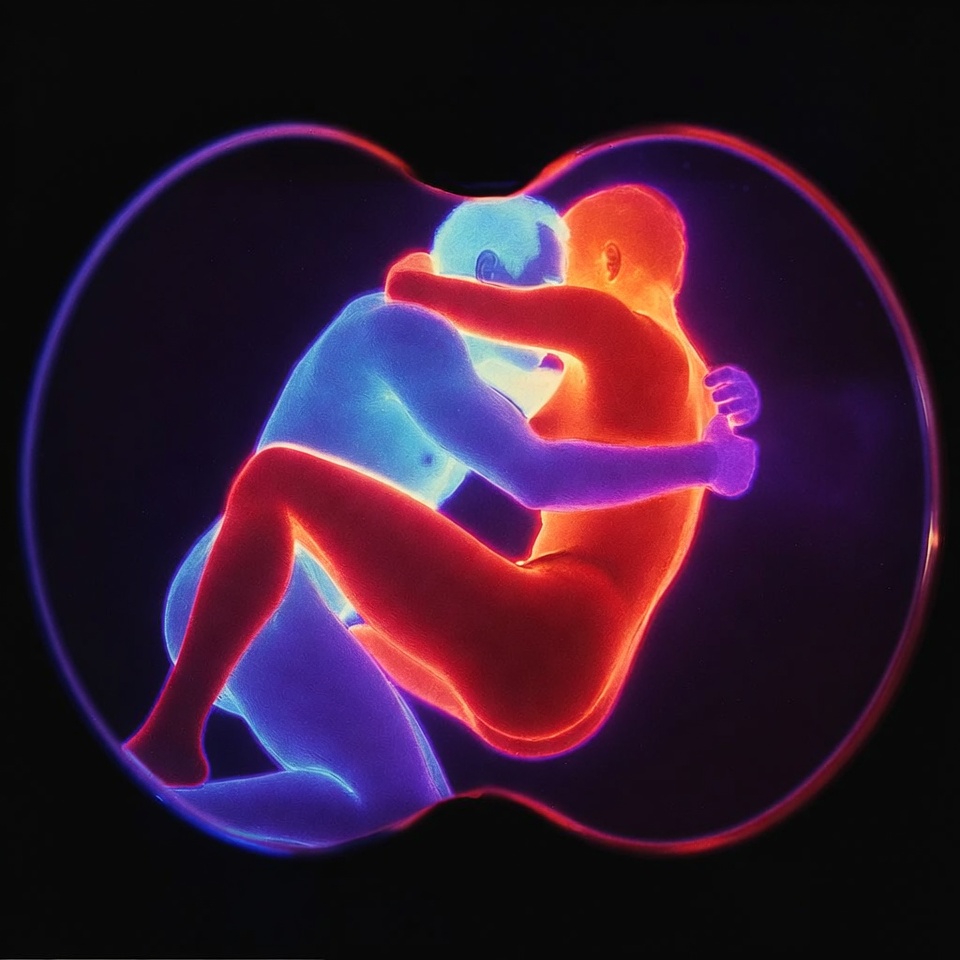
For POV shots — particularly gynoid interfaces — generative GUI elements are coded using p5.js. I use ChatGPT to generate the JavaScript code. Those animated system layers are then integrated into the final composite.
The voice-over is recorded in my room, using a simple but controlled setup, edited in Audacity. Character voices are generated through ElevenLabs and processed further in post to avoid overly clean, synthetic tonality.
Why This Matters?
It would be easy to shortcut this process, prompt scenes directly and accept whatever emerges. But Terms of Service isn’t about speed. It’s about control. It's about delivering exactly what I want to show.
Thematically, the series explores systems that appear autonomous but are deeply structured underneath. It would feel dishonest to build it any other way.
DESIGN -> CONTROL -> ILLUSION OF LIFE
That's the way I like it.
TOS HUB
By the way, if you haven't seen it yet, "Terms of Service" project has its own mini hub over here, where you can always look at the latest concepts, watch trailers and try an fully interactive "Gynoid Creator". The hub will be gradually updated with new, exciting stuff, so make sure to check it out!
More coming soon, cheers.
— Adam